Polyaspartic Coatings for Industrial Flooring in NJ
When you operate an industrial facility, your floors need to handle serious wear from heavy machinery, constant traffic, chemicals, and temperature changes. At Fortress Floor Coatings, we install industrial floor coatings in New Jersey designed to protect your concrete, improve safety, and keep your operations running smoothly.
That’s why we use a polyaspartic double-coat concrete system built for strength, longevity, and real-world industrial use. The first layer penetrates deep into the concrete, sealing cracks and surface imperfections while creating a strong bond. The second layer forms a tough, abrasion-resistant surface that withstands heavy machinery, forklifts, pallet traffic, and daily wear.
This two-layer system not only extends the life of your concrete floors but also provides excellent resistance to chemicals, moisture, and temperature changes, making it a smart solution for the wide range of industrial facilities in New Jersey.
Benefits of Polyaspartic Industrial Floor Coatings
Polyaspartic coatings are one of the most reliable solutions for industrial concrete floors. Compared to traditional epoxy, they offer faster curing, greater durability, and a finish that holds up under demanding conditions. When you choose polyaspartic industrial floor coatings, you get long-term performance, less maintenance, and a professional finish that doesn’t break down over time.
Enhanced Durability
Polyaspartic coatings are built to resist abrasions, impacts, and constant wear. They help protect your concrete from cracking, chipping, and surface damage caused by heavy equipment and daily operations.
Fast Curing Times
Polyaspartic coatings cure much faster than epoxy, allowing your facility to return to service sooner and minimizing operational disruptions while keeping projects on schedule.
Chemical Resistance
From oils and solvents to cleaning agents and industrial chemicals, polyaspartic coatings protect your floors from stains, deterioration, and costly concrete damage.
UV Stability
Unlike epoxy, polyaspartic coatings resist yellowing and discoloration when exposed to sunlight, which makes them ideal for both indoor and outdoor industrial concrete surfaces.
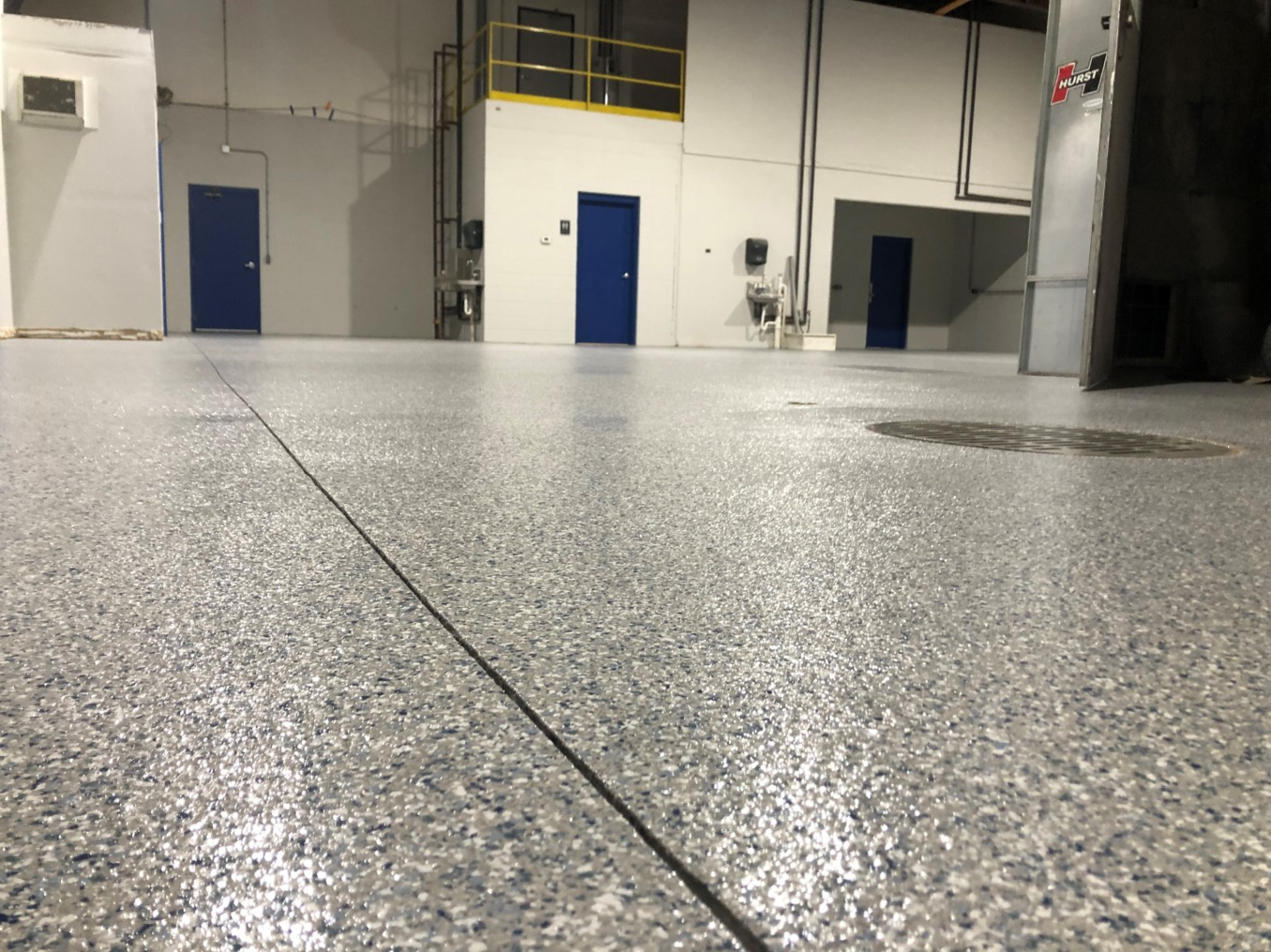
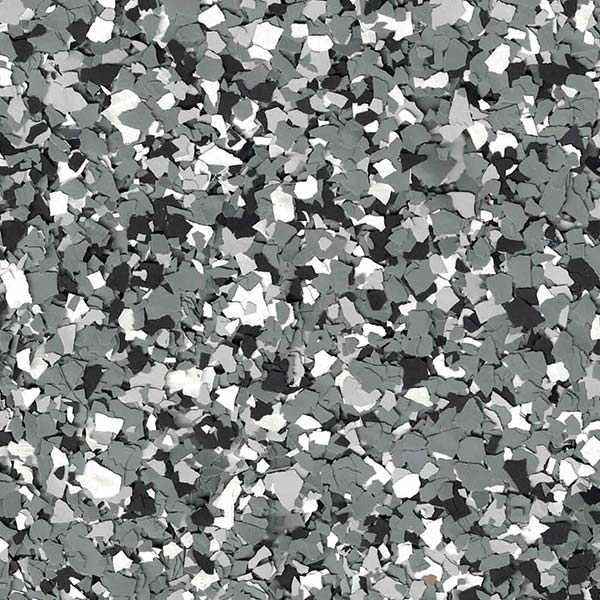
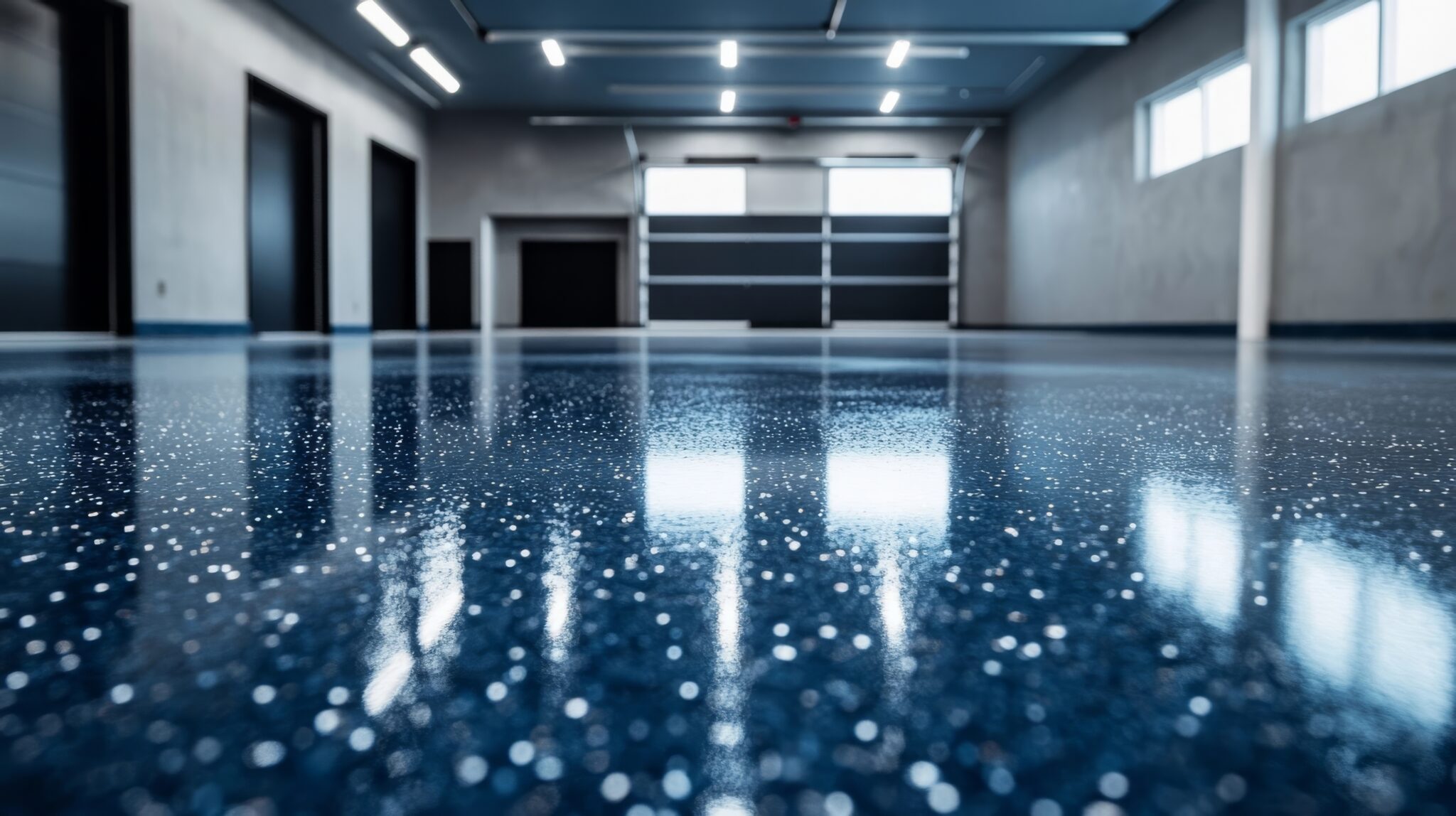
Industrial flooring doesn’t have to look plain. Choose from a variety of colors, textures, and finish options to match your facility’s needs, improve visibility, or designate work zones. We’ll help you select a finish that balances performance, safety, and appearance.
We follow a proven, multi-step process designed specifically for industrial floor coatings. Every step focuses on proper preparation, strong adhesion, and long-term performance, ensuring your floors can withstand heavy equipment, chemicals, and daily industrial use.
Surface Preparation
Surface preparation is the foundation of a long-lasting industrial floor coating. We begin by mechanically grinding your concrete with professional diamond-grinding equipment to remove the weak surface layer and prepare the concrete for proper bonding. During this step, dust is controlled with industrial vacuum systems to keep your facility clean. We also address cracks, pits, and other damage and remove deep contaminants, such as oil or grease, when needed.
Base Coat Application
Once the surface is properly prepared, we apply two layers of polyaspartic coating to create a tough, abrasion- and chemical-resistant finish. This system is designed to withstand forklifts, heavy machinery, pallet traffic, spills, and temperature changes, all while maintaining a clean, professional finish.
Polyaspartic Topcoat Application
We then apply a high-quality polyaspartic topcoat that penetrates and seals the concrete. The topcoat strengthens the substrate and creates a strong bond between the concrete and the coating system, helping prevent peeling, lifting, or premature wear in demanding industrial environments.
Final Inspection, Curing & Quality Control
Before the project is complete, we perform a detailed final inspection to ensure uniform coverage, proper adhesion, and overall finish quality. Once approved, the floor is allowed to cure fully, leaving you with durable industrial floor coatings that meet our standards and are ready for daily operations.
We proudly serve all of New Jersey, including Bergen County, Passaic Valley, Monmouth County, Ocean County, and beyond. Wherever you are in the state, we deliver industrial floor coating solutions that work.
Morris County
Middlesex County
Essex County
Union County
Monmouth County
Hudson County
Ocean County
Somerset County
Bergen County
Industrial Floor Coatings FAQs
How long do polyaspartic industrial floor coatings last?
When professionally installed, polyaspartic industrial floor coatings can last 10–20 years or longer, depending on traffic levels, chemical exposure, and routine maintenance. Their durability makes them a long-term solution for warehouses, manufacturing plants, distribution centers, and other industrial facilities throughout New Jersey.
Can polyaspartic coatings withstand heavy machinery and forklift traffic?
Yes, polyaspartic industrial floor coatings are engineered to handle forklifts, pallet jacks, heavy machinery, and constant equipment movement. The coating creates a tough, abrasion-resistant surface that protects the underlying concrete from cracking, chipping, and surface wear.
How do polyaspartic industrial floor coatings handle chemical exposure?
Polyaspartic coatings offer excellent resistance to oils, solvents, fuels, cleaning agents, and many industrial chemicals. This protection helps prevent staining, surface deterioration, and costly concrete damage in demanding industrial environments.
Are industrial floor coatings slip-resistant?
Slip-resistant additives can be incorporated into the coating system to improve traction in areas with spills, moisture, or oil, enhancing safety for employees working in high-traffic or high-risk zones.
Can polyaspartic coatings be customized for different industrial uses?
Absolutely! Industrial floor coatings can be customized with different colors, textures, and finish levels to meet your facility’s needs, which can include creating safety zones, traffic lanes, or clearly marked work areas within warehouses and industrial spaces.
Do polyaspartic coatings work in cold or humid environments?
Polyaspartic coatings perform well in New Jersey’s changing climate, including cold temperatures and high humidity. Unlike epoxy, they’re less sensitive to temperature swings during installation and throughout their lifespan.